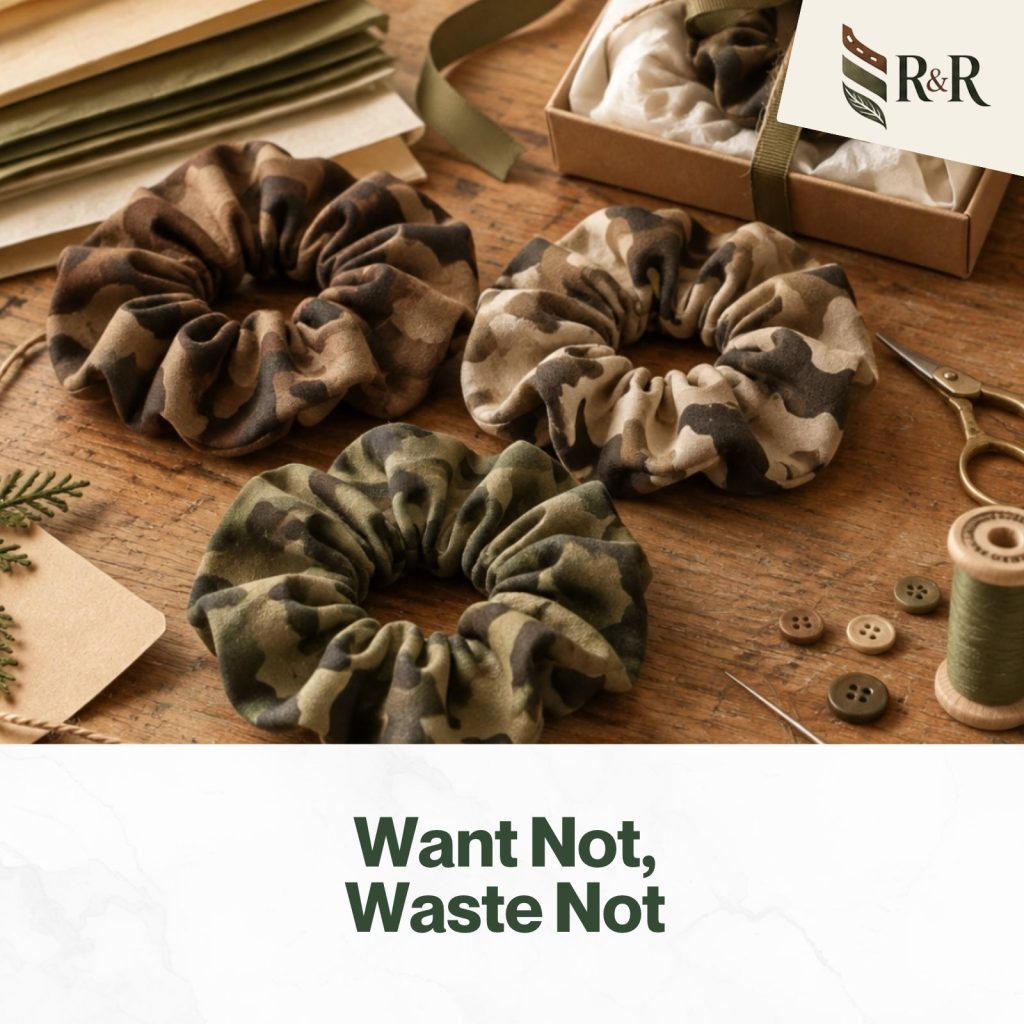
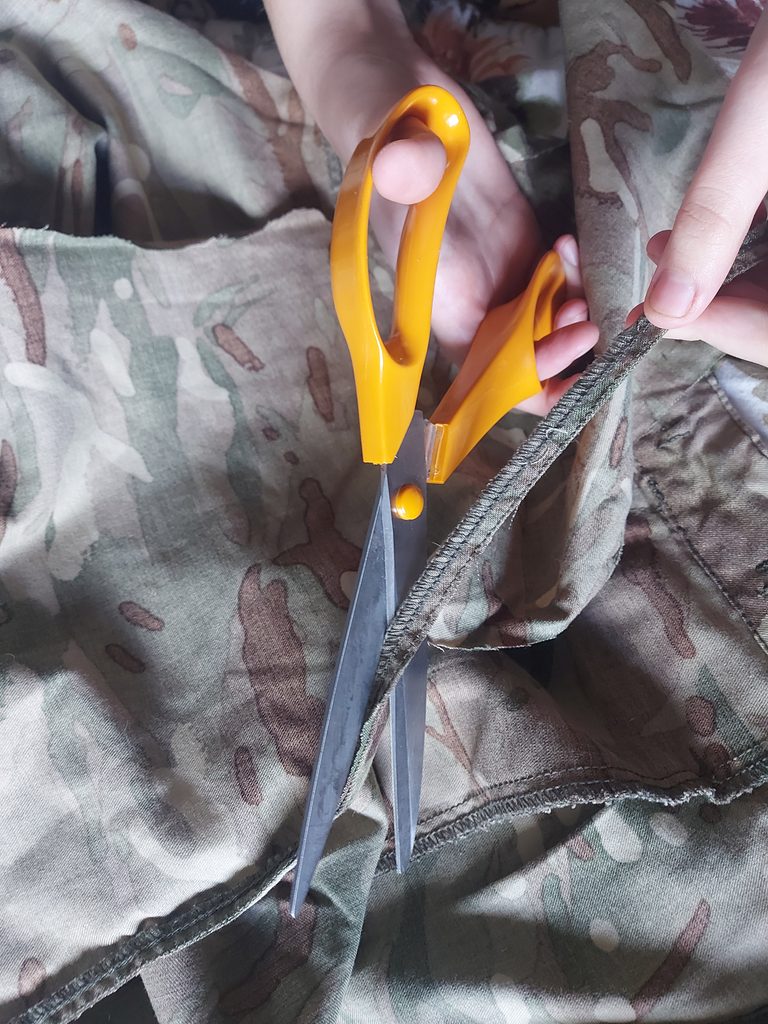
Some of the most meaningful gifts begin with something that already has a story. At Rein and Rank, we’re exploring how useful materials can sometimes be given a new purpose instead of being thrown away. One example close to home is turning old cadet trousers into scrunchies: a practical way to transform familiar fabric into something different.
But we want to be clear about what this means. Not every Rein and Rank product is made from reclaimed or recycled materials. We always aim to be environmentally friendly and not cause wastage. We believe it’s important to talk about that honestly, rather than suggest every item is made in the same way.
A new use for familiar fabric
A well-used garment can hold memories as well as material. Cadet trousers, for example, may bring to mind training nights, friendships and time spent supporting young people. When fabric is no longer needed for its original purpose, it may still have useful life left in it. Turning suitable sections into scrunchies gives that fabric another chance to be used. It also makes each item a little different: the source material may have its own texture, wear and character. For us, that individuality is part of the appeal of handmade gifts.
It’s a small example, not a claim that every old garment can be transformed or that every product should be made from reclaimed fabric. Materials need to be suitable for the job, and not all of them are. But when a good material can be used again, we think it’s well worth considering.
Why reducing waste matters to us
Making things by hand encourages you to look closely at materials: what they are, what they can do, and whether there’s a useful purpose for the pieces left over. That way of thinking feels natural to Rein and Rank. We’re a mother-and-daughter business built around creativity, resourcefulness and making things with purpose.
We’re also a disabled- and veteran-owned business. Liz, an Army Cadet instructor, and her daughter Izzy are shaping Rein and Rank together, at a pace that works for us. Our business is being built around real people, real skills and the circumstances of everyday life, not around producing identical items as quickly as possible.
That perspective influences how we think about waste. We want to make thoughtful choices where we can, whether that means repurposing suitable fabric or being careful not to use more material than a project needs. It’s an aim that guides us, rather than a claim that every item will always be reclaimed, recycled or impact-free.
Small pieces can still have a purpose
When a project uses fabric, there may be smaller pieces that aren’t suitable for the main item. Before treating those as waste, we can ask whether they might work for another purpose. Depending on the material and its condition, an offcut could be kept for a smaller craft project or put to another practical use.
That doesn’t mean every scrap can be saved. Some materials aren’t suitable for reuse, and there are limits to what can be made from a small piece. The important thing is to think carefully before throwing something away, without promising that nothing will ever be left over. This kind of resourcefulness is part of the Rein and Rank story. Our values include making with purpose, being practical and finding ways to make something individual. Reuse and repurposing fit naturally into that, when the material and project are a good match.
Handmade doesn’t have to mean “perfectly uniform”
Repurposed materials bring their own character. A fabric’s colour, texture or previous use may mean that no two finished pieces look exactly alike. For us, that’s not a problem to hide; it’s part of what makes handmade items personal.
The same is true of making at our own pace. Rein and Rank is built around Liz and Izzy creating in a way that works for them, including through periods of rest and recovery. We don’t believe handmade has to mean mass-produced in miniature. A small batch, a variation or a one-off can be a good thing.
That approach connects to the people and communities that inspire us. Liz’s experience as an Army Cadet instructor is part of the business’s roots, and service, youth organisations and community are important to our identity. Repurposing old cadet trousers into scrunchies brings together that background with a practical, creative idea.
A thoughtful approach, not a blanket promise
We know that people care about where products come from and how they’re made. We do too. That’s why we want to be straightforward: some items may use reclaimed materials, while others may need new materials to do their job. The right choice depends on the product and what’s suitable for it.
Our aim is to be environmentally friendly and avoid wastage wherever we reasonably can. Sometimes that may mean reusing a material. Sometimes it may mean using it carefully, making a useful item that can be enjoyed, or choosing a material that’s better suited to the project. We’ll keep learning as we build the business.
There’s good reason to think about extending the life of materials. The UK Government’s Waste Prevention Programme for England explains that producing goods uses resources, and that reuse can help keep products and materials in circulation for longer. The programme’s textile section also discusses the benefits of reuse and the importance of reducing textiles sent to residual waste. These are broad points about resource use, not a claim that any single handmade item solves a larger problem.

Making room for more stories
As Rein and Rank moves towards launch, we’re looking forward to sharing more about the things we make and the ideas behind them. Some will be connected to country life, pets, service or cadets. Some will simply be thoughtful gifts. And some may make use of materials that are ready for a second purpose.
Turning old cadet trousers into scrunchies is one real example of what resourcefulness can look like for us. It’s practical, personal and rooted in a story that matters to our family. It also captures an idea we want to carry into the business: make thoughtfully, use what you can, and don’t waste materials without considering whether they still have something to offer.
Not everything we make will be reclaimed or recycled. But environmentally friendly choices and avoiding wastage will remain aims as we grow: one handmade idea at a time.